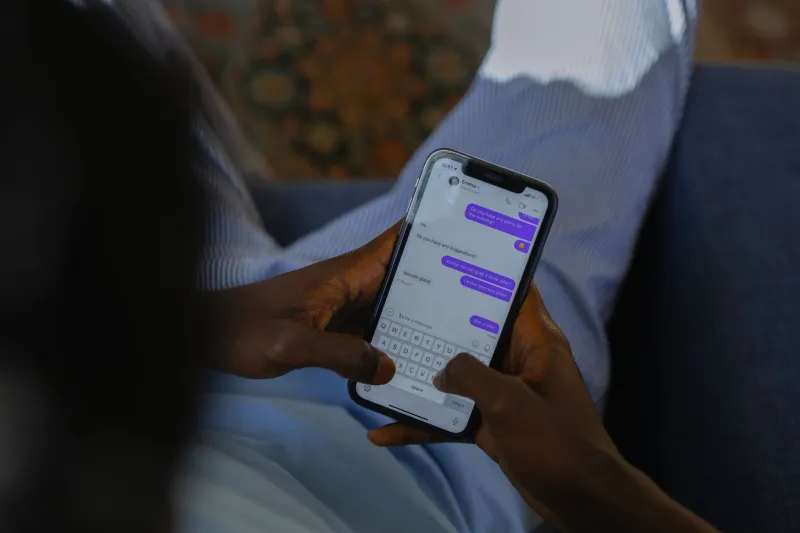
Three Messages In and Already Ghosted? Here's Exactly Why Your Chats Keep Dying

You got the match. You typed something halfway decent. They actually wrote back. You were this close to planning your future dog's name together — and then silence. Complete, deafening, soul-crushing silence.
Welcome to the Three-Message Graveyard, a place more crowded than a Trader Joe's parking lot on a Sunday afternoon.
Here's the uncomfortable truth: most early dating app conversations don't die because of bad chemistry. They die because of bad conversational habits that most people don't even realize they have. The good news? Every single one of them is fixable. Let's dig in.
The "Interview Mode" Trap (And Why It's Killing Your Vibe)
Imagine going on a first date where someone pulls out a clipboard and starts reading from a list: Where are you from? What do you do? Do you have siblings? You'd fake a family emergency and leave within ten minutes.
So why do so many app conversations look exactly like that?
Asking generic, surface-level questions in rapid succession — "What do you do for fun?" followed immediately by "Do you like to travel?" followed by "Are you close with your family?" — signals one thing loud and clear: you have no idea how to actually talk to people. It feels like a background check, not a conversation.
The fix is embarrassingly simple: ask one interesting question and then actually respond to their answer. Build on what they say. If they mention they spent the weekend hiking, don't pivot to asking about their job. Ask about the hike. Where? Did they get lost? Did they see anything weird on the trail? Conversations have momentum, and momentum is built by following threads, not cutting them.
You're Being Way Too Relatable, Way Too Fast
There's a fine line between being open and being a walking confessional booth. Oversharing in the first few messages is one of the fastest ways to send someone sprinting in the opposite direction.
This isn't about being fake or guarded. It's about pacing. When someone you've known for approximately four text exchanges tells you about their complicated relationship with their ex, their anxiety diagnosis, and their complicated feelings about their career — all before you've even established whether they prefer coffee or tea — it creates a weird pressure. Suddenly the other person feels like they either need to match your emotional depth immediately or ghost you to avoid the responsibility.
Keep early conversations light without being shallow. Think of it like a good TV pilot: you want to hint at the interesting layers without revealing the entire plot in the first episode. Leave them curious. Leave them wanting to know more.
Humor Mismatch: The Invisible Conversation Killer
Not all humor is created equal, and not all humor translates through text. Dry, sarcastic humor — the kind that works brilliantly in person with the right facial expression — can read as genuinely mean or just plain confusing in a chat window. Meanwhile, someone who communicates primarily through memes might come across as either hilarious or deeply unserious depending on who's on the receiving end.
Before you go full comedy mode, take a beat and read the room. Look at how your match communicates. Are their messages long and thoughtful, or short and punchy? Do they use exclamation points and emojis, or are they more understated? Mirror their energy a little before you try to redirect it.
This isn't about being someone you're not. It's about finding the frequency where you both actually connect. If your humor genuinely doesn't land with this person, that's useful information too.
The "Cool Person" Performance Problem
Here's a pattern that shows up constantly and almost nobody talks about: people trying so hard to seem chill, mysterious, and low-maintenance that they become completely unreachable.
One-word responses. Vague, non-committal answers. Never asking questions back. It reads as disinterest — because in every practical sense, it is disinterest, even if that's not the intention. The whole "I don't want to seem too eager" strategy works great in theory and terribly in practice.
Showing genuine enthusiasm about someone is not desperate. It's attractive. Asking a follow-up question because you actually want to know the answer is not clingy. It's called being a functional conversationalist.
You don't have to send paragraphs every time. But you do have to show up. Ask things. React to things. Let the other person feel like talking to you is actually worth their time.
The Framework That Actually Works
So what does a conversation that doesn't die look like? Here's a loose framework to keep in your back pocket:
Start specific, not general. Reference something from their profile — a photo, a detail in their bio, something they mentioned. It shows you actually looked, and it gives the conversation a specific place to begin instead of a generic void.
Trade stories, not just answers. Instead of asking "Do you cook?" try sharing a brief, slightly self-deprecating anecdote about your own cooking disaster and then asking about theirs. Stories invite stories. Questions invite answers. One of those is a conversation; the other is a survey.
Know when to suggest moving it forward. After a few good exchanges, it's completely fine — actually, it's great — to suggest a phone call, a video chat, or grabbing coffee. The goal of app conversation isn't to become pen pals. It's to figure out if you want to actually meet this person. Don't let the conversation become a substitute for real connection.
Let silences breathe without panicking. Not every message needs a response within four minutes. But if a conversation has been dead for 48 hours, it's okay to send one light, low-pressure follow-up. Just one. If they don't respond, you have your answer — and you can stop haunting your own phone.
The Bottom Line
Great early conversations aren't about being the wittiest person on the app or having the most interesting life to report. They're about making the other person feel genuinely seen and interested in, and doing it in a way that feels natural rather than forced.
The Three-Message Graveyard doesn't have to be your permanent address. With a little self-awareness and a willingness to actually engage, you can be the person whose conversations everyone actually looks forward to answering.
Now go start something worth finishing.