Drowning in Matches, Starving for Connection: The Dark Side of Having Too Many Options

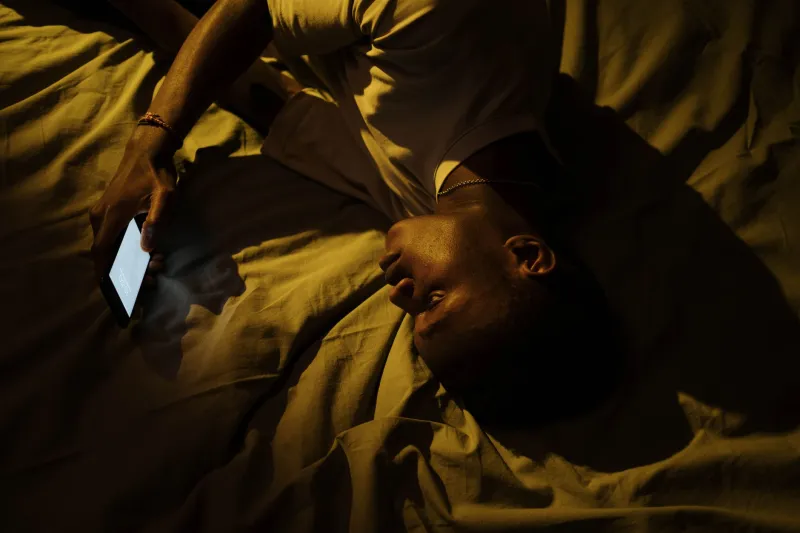
Here's a scenario that probably sounds familiar. It's a Tuesday night. You're on the couch, phone in hand, swiping through a queue of potential matches that seems to stretch to the actual horizon. You've got fourteen active conversations going. Three people have asked you out this week. By every measurable metric, your dating life is thriving.
So why does it feel like you're eating cotton candy for every meal? Technically full. Nutritionally bankrupt.
This is what we at MatchMingle lovingly (and with deep concern) call the Mingle Paradox: the more connections you accumulate, the lonelier you actually get. It sounds counterintuitive. It absolutely is. And it's quietly wrecking a generation of otherwise perfectly dateable people.
Your Brain Wasn't Built for This
Let's start with some uncomfortable neuroscience. Human beings evolved to form bonds in small, intimate groups — not to maintain simultaneous emotional threads with forty-seven strangers from across the tri-state area. When you're juggling that many potential connections at once, your brain doesn't rise to the occasion. It does the opposite. It starts treating people like browser tabs.
Psychologists call this decision fatigue — the mental exhaustion that comes from making too many choices in a short period. Barry Schwartz famously dubbed the broader phenomenon the "Paradox of Choice" back in 2004, and his core insight was brutal: more options don't make us happier, they make us more anxious, more second-guessing, and ultimately less satisfied with whatever we pick. Dating apps have essentially weaponized this effect and handed it directly to your romantic life.
When every swipe reveals another option, no single match ever feels truly irreplaceable. And if nobody feels irreplaceable, nobody feels real.
The Disposability Trap
Here's where it gets genuinely sneaky. The abundance of options doesn't just make choosing harder — it fundamentally changes how you emotionally engage with each person before you've even met them.
When you know there are forty more matches waiting one swipe away, your investment in any single conversation drops. Why put real effort into getting to know Alex from Denver when Taylor from Austin just matched with you and their opening line was actually funny? The math feels rational. The emotional cost is enormous.
You start skimming instead of reading. You respond with half your attention. You let perfectly good conversations die because re-engaging feels like effort, and effort feels optional when the queue never empties. What you're really doing, without realizing it, is treating potential partners as content to be consumed rather than people to be known.
And here's the cruel twist: when you treat others as interchangeable, you start to feel interchangeable yourself. The loneliness isn't just about not connecting — it's about losing the sense that you are someone worth genuinely connecting with.
Why Quantity and Quality Are Secretly at War
There's a widely shared belief in the swiping world that more matches equal better odds. Cast a wider net, catch a bigger fish, right? But this logic only holds if you're actually following through — and the data on that is grim.
Studies on online dating behavior consistently show that users with the highest match counts tend to convert those matches into actual dates at lower rates than users with fewer, more selective matches. The sheer volume creates a psychological buffer between matching and meeting. There's always a reason to wait. Maybe someone better is coming. Maybe you'll feel more ready tomorrow. Maybe you'll just... see what else is out there first.
Tomorrow never really comes. "Someone better" is a horizon you never reach. And the person who might have been genuinely great for you? They stopped waiting around after day three.
The Emotional Numbing Nobody Talks About
Spend enough time in high-volume swiping mode and something subtle but serious starts to happen: you stop feeling the little sparks. You know the ones — that tiny jolt of excitement when someone says something unexpectedly charming, or the warmth you feel when a conversation flows so naturally it catches you off guard.
Those moments get buried under sheer volume. When you're processing dozens of conversations simultaneously, genuine chemistry starts to feel like background noise. You need increasingly loud signals to register interest. And because most real connections start quietly — with small, easy moments that build over time — you keep swiping right past them.
This is emotional numbing, and it doesn't announce itself. It just slowly turns the volume down on your capacity to notice and appreciate the people who might actually matter.
So What Do You Actually Do About It?
The good news: the Mingle Paradox isn't a permanent condition. It's a habit pattern, and habit patterns can be interrupted. Here's how to start.
Cap your active conversations. Seriously. Pick a number — five is a solid ceiling for most people — and don't let yourself go above it. This isn't about being picky, it's about being present. You cannot give genuine attention to twelve simultaneous conversations, and attempting it just produces twelve shallow ones.
Set a time limit on the pre-date phase. If you've been chatting with someone for more than two weeks without making plans, something's wrong. Either you're not that interested — in which case, be honest and move on — or you're using conversation as a substitute for the real thing. Either way, push toward an actual meeting or close the tab.
Pause the queue occasionally. Take a week off from swiping entirely. Not forever, just long enough to actually follow through on the connections you already have. You'll be surprised how quickly your engagement quality improves when there's no infinite scroll waiting to distract you.
Treat matches like people, not prospects. Before you reply to someone, spend thirty seconds actually reading their profile. Ask a question that couldn't apply to literally anyone. Remember something they told you yesterday. It sounds small because it is small — but small is where real connection lives.
The Paradox Has a Solution (And It's Less Swiping)
MatchMingle exists because we genuinely believe in the spark — that electric, slightly terrifying feeling that happens when two people actually click. But sparks don't fly in a tornado. They need a little stillness to catch.
The Mingle Paradox isn't proof that dating apps don't work. It's proof that using them like a slot machine doesn't work. The platform isn't the problem. The volume is.
You don't need more matches. You need to actually be there for the ones you already have.
Put the phone down for a second. Take a breath. Then go have one real conversation — just one — like it's the only one that matters tonight.
Because for tonight, it is.