You're Dating Them, But You're Not Really *There*: The Sneaky Habit of Treating Your Match Like a Placeholder

You're Dating Them, But You're Not Really There: The Sneaky Habit of Treating Your Match Like a Placeholder
Here's a scenario that might hit a little close to home. You matched with someone a few weeks ago. They're funny, they text back in a reasonable amount of time, and they haven't once sent you a picture of their car as a personality trait. By most measurable standards, they're pretty great.
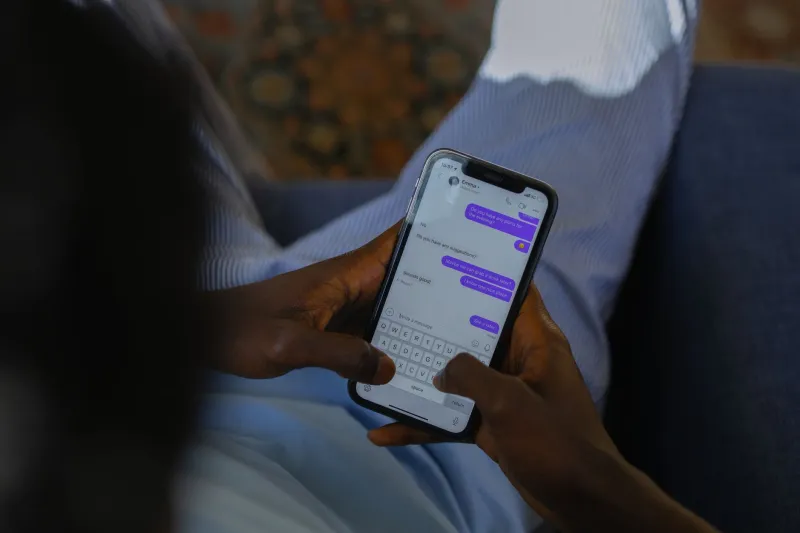
And yet — every morning, you open the app. You swipe. You browse. You think, maybe today's the day someone even better shows up.
Congratulations. You've benched someone who hasn't done anything wrong, and you don't even feel bad about it yet.
What the Bench Player Mindset Actually Looks Like
Benching, in the dating context, isn't the same as ghosting or stringing someone along with zero interest. It's subtler than that, which is precisely what makes it so easy to justify.
You're still showing up — sort of. You're still responding, still making plans occasionally, still giving just enough to keep the connection warm. But in the back of your mind, this person has been quietly assigned a role: good for now, not the final answer.
You're treating them like a Tuesday night dinner option when you're secretly holding out for a reservation at the hottest new restaurant in town — even though that restaurant might not exist.
The telltale signs? You hesitate to make plans more than a week out. You keep your emotional investment deliberately shallow. You catch yourself describing them to friends with a "but" attached — "They're great, but..." — even when you can't fully articulate what the "but" actually is.
Why Dating Apps Are Basically a Machine Designed to Do This to You
Let's be fair to ourselves for a second: dating apps are architecturally engineered to make this mindset feel rational.
The entire interface is built around the premise that there's always another option one swipe away. Psychologists call this the paradox of choice — the idea that more options don't make us happier or more decisive, they make us more anxious and less satisfied with whatever we've already chosen. Barry Schwartz literally wrote the book on it, and dating apps are a masterclass in the phenomenon.
When your match queue is theoretically infinite, committing to this person feels like agreeing to stop looking — and stopping feels like losing. Even if what you already have is genuinely good, the app's design whispers that "good" might just mean you haven't found "great" yet.
So you keep one foot in the door with your current match and one foot on the gas with your profile. It feels like smart hedging. It's actually just fear with a UX problem.
The Comparison Trap Nobody Warns You About
Here's what makes the bench player habit particularly insidious: you're not comparing your current match to a real person. You're comparing them to a fantasy composite.
The imaginary "better option" you're waiting for has no bad days, no communication quirks, no weird opinions about pineapple on pizza. They exist only in the highlight-reel version of your imagination, assembled from the best parts of every person you've ever been attracted to. Your current match — an actual human being with actual dimensions — simply cannot compete with that, because no one can.
This is comparison culture at its most absurd. You've essentially entered your very real, very present match into a competition against someone who doesn't exist, and then penalized them for losing.
What It's Actually Costing You
Beyond the obvious ethical weirdness of keeping someone warm while you window-shop, the bench player mindset has a personal cost that doesn't show up until later.
First, you never actually get good at connecting with people. Real intimacy requires risk — the risk that this is the person you're choosing, not the person you settled for while waiting. When you keep one mental exit door open at all times, you never fully walk through the front one. You stay surface-level. You stay safe. And then you wonder why nothing ever feels like it's going anywhere.
Second, you train yourself to be perpetually dissatisfied. The habit of scanning for upgrades doesn't turn off when you finally meet someone who checks every box. You'll just find new boxes to check. The app stays open. The search continues. The "but" never goes away.
Third — and this one stings — you're wasting someone else's time and emotional energy. The person sitting across from you at dinner, genuinely trying to connect, doesn't know they've been cast as an understudy. That's not a small thing.
How to Know If You're the One Doing This
Honest self-assessment time. Ask yourself:
- Are you genuinely excited about this person, or just comfortable enough not to end it?
- If the apps disappeared tomorrow, would you feel relieved or panicked?
- Have you introduced them to anyone in your life, or kept things deliberately contained?
- When something good happens in your day, is this person who you want to tell?
None of these questions have trick answers. But they'll tell you pretty quickly whether you're actually dating someone or just filling a time slot.
So What Do You Do Instead?
You've got two honest options, and neither one involves keeping the bench warm indefinitely.
Option one: Decide to actually show up. Close the other tabs — mentally, not just literally. Give the person in front of you a real shot, which means investing enough to find out if they're actually right for you rather than keeping your emotional bags packed by the door.
Option two: End it cleanly. If your gut genuinely says this isn't the right match, that's valid — but the kind thing is to say so, not to let them orbit you while you search for a replacement.
The hardest part of modern dating isn't finding matches. It's choosing one and meaning it. MatchMingle can swipe you into someone's orbit, but it can't make you actually land there. That part's on you.
The best connection you'll ever have won't show up because you kept your options perfectly optimized. It'll show up because you were actually present long enough to recognize it.